A central route around the Forum and theatres differs from a longer visit towards the amphitheatre. Build it on the map, not just a list of famous names.
Choose the entrance before arranging a meeting
The park lists Porta Marina Superiore, Porta Marina Inferiore/Piazza Esedra and Piazza Anfiteatro as its main gates. They serve different parts of the route. Choose around your ticket, any guide meeting and the places you want to see.
Use the official map to connect entrance, route and exit. Pompeii ruins alone is not a precise meeting point; the modern town, sanctuary and railway stations are also different destinations.
The Forum and the workings of a city
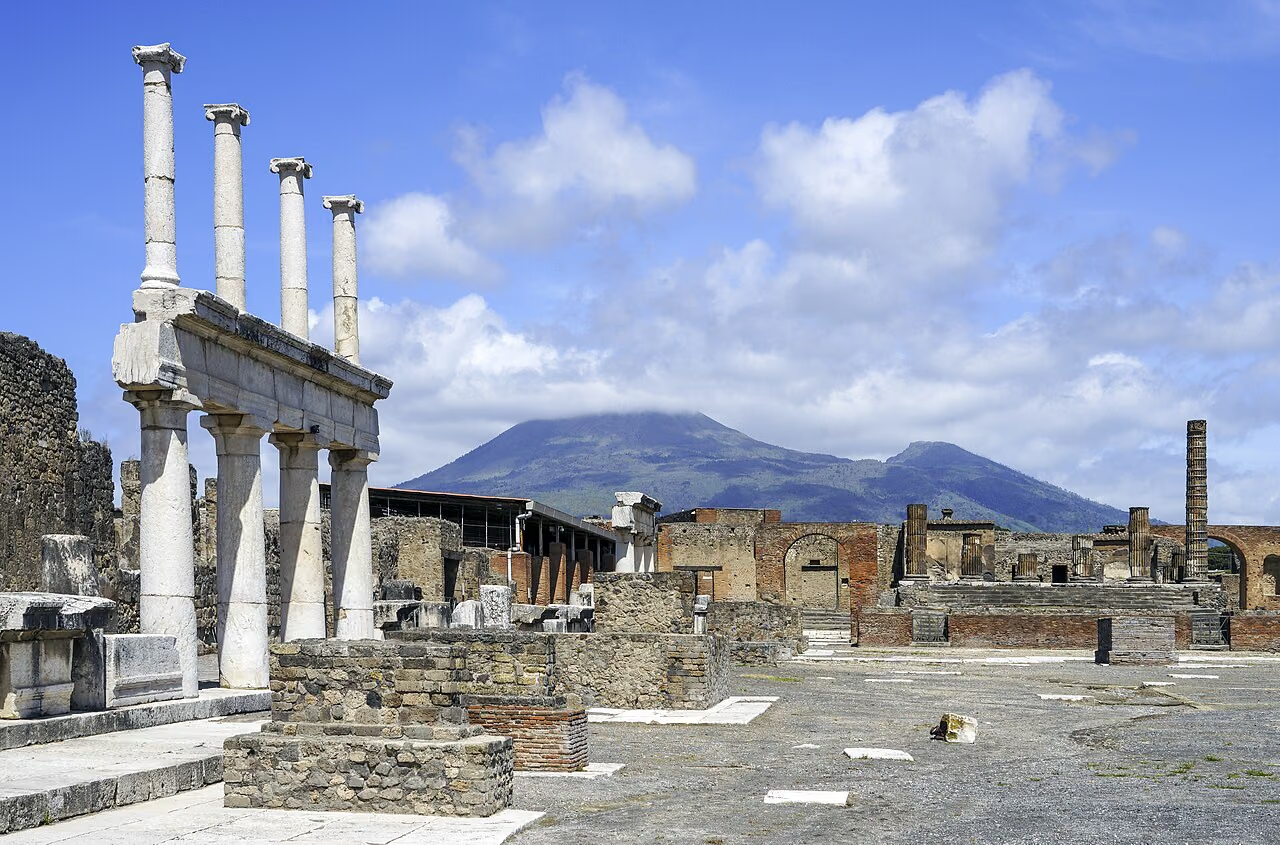
The Forum and surrounding buildings introduce public life, with religious, administrative and commercial spaces around the civic centre. Look at relationships between buildings rather than isolated columns; the Basilica and sanctuaries help give the remains a purpose.
A guide or official visitor tools can add context without covering every street. Follow a public-space visit with houses or another district to compare civic and everyday life.
Houses, shops and everyday routines
Domestic and working spaces make the site tangible. Atriums, courtyards and decorated rooms explain a home, while bakeries, commercial spaces and baths show other uses of the city. Notice thresholds and room arrangements as well as paintings.
Individual buildings may close for conservation or works. Choose several priorities from current information and keep alternatives. For mobility needs, consult the park’s dedicated guidance rather than assuming all areas share the same accessibility.
The theatre district and the amphitheatre
The Teatro Grande and Odeion belong to the theatre district; the amphitheatre lies elsewhere. Distinguishing them avoids unnecessary backtracking and makes clear when a route expands beyond its initial focus.
With more time, consider the walk towards the amphitheatre and neighbouring areas. With a few hours, exploring one sector properly is a reasonable choice rather than racing to every district.
Walking, heat, pauses and luggage
Take walking shoes, water and sun protection. Ancient surfaces and changes in level deserve attention. Plan breaks for children and groups with different rhythms, and use the service map for food, information and practical stops.
Check the park’s current luggage rules and facilities. If visiting between Naples arrival and coastal accommodation, agree where suitcases will stay beforehand rather than assuming admission or vehicle storage.
A dedicated day or a stop on the way?
From Maiori or Ravello, Pompeii can be the main visit with a return to the same base. During a Naples-to-coast journey it becomes a stop between travel stages, with different timing and luggage needs.
Anthony arranges your travel by car. Agree tickets, visiting times and any waiting as part of your plan. Choose the visit first, then organise arrival and the return around it.
PUTTING IT TOGETHER
A suggested itinerary
Before entry
Prepare your ticket, gate, map and any guide appointment. Identify the exit too if it differs from the entrance.
Follow a theme
Combine the Forum, selected domestic spaces and theatre district, or extend towards the amphitheatre according to time and conditions.
Pause and continue
Allow time for refreshments and the exit. Return to the coast or continue to new accommodation with luggage already arranged.
Before choosing your plan
Are all gates interchangeable?
No. Choose for the route and any guide meeting, and tell your driver the exact gate.
Can I see everything in a few hours?
Choose a coherent route and priorities instead. The site is extensive and individual opening arrangements vary.
Can I request a guided visit to the ruins?
On request, Anthony can arrange a visit with a licensed tour guide. Agree the language, time and cost before confirming.
Arrange your visits
Check opening arrangements, admissions and route conditions for your chosen day.